If it isn't measured, it's a guess.
Real Ear Measurement (REM), also called live speech mapping, is the gold standard for verifying that a hearing aid is delivering what your hearing loss actually requires. We perform it on every fitting, and we show you the results.
What most people get instead
When a hearing aid is programmed, the manufacturer's software makes a prediction. It takes your hearing test results and estimates how much sound to push out of the speaker in order to hit the targets your loss requires. That estimate is built on a plastic model head with an average shaped ear canal.
There is no average ear canal. The same estimate gets applied to a man in his fifties at 250 pounds and a woman in her thirties at 90 pounds, and their ear canals are nothing alike in shape, length, or volume. There is also a gap between the tip of the hearing aid speaker and the eardrum, and what happens acoustically in that gap changes everything. The software cannot see any of it.
That prediction is called first fit, and for a great many people it is where the process stops.
What we do instead
We place a very thin probe microphone in your ear canal, next to the eardrum, and turn the hearing aid on. At that point we are no longer estimating what reaches your eardrum. We are measuring it, at every pitch, while you sit there.
We know what the targets should be because your hearing evaluation was performed at calibrated intensities. That tells us the sound pressure level each frequency needs to reach at your eardrum. Then it is a matter of comparing what is actually arriving against that target and correcting the difference.
The correction is manual and it takes time. Fifteen to twenty minutes or more of adjusting gain frequency by frequency, re-measuring, and adjusting again until the curves line up.
What that looks like on the screen
You will see two sets of lines. The dotted line is the manufacturer's estimate of how to deliver your prescription. The solid line is what your ear is actually receiving after verification and correction.
On a recent fitting, matching target meant adding fifteen decibels of gain at 2000 Hz and pulling ten decibels back at 750 Hz. Those are not small adjustments. That is the difference between following a conversation across a restaurant table and nodding along hoping you guessed right.
Why it matters more than which hearing aid you buy
Most people assume the premium model is what determines whether they hear well. Technology does play a real role. But an entry level hearing aid that has been properly verified will frequently outperform a top of the line device left on first fit settings. You are better off buying a good device and having it fit correctly than buying the best device and having it fit by estimate.
Without measurement, a provider is adjusting in the dark. They change something, ask how it sounds, and change it again based on what you tell them. That only works if you can describe a technical acoustic problem precisely, in the office, on the spot. Most people cannot, and they should not have to.
This is a large part of why so many hearing aids end up in a drawer, and why so many people are told that this is as good as it gets and they simply need to get used to it.
You should not have to get used to it. You should be able to see the measurement.
How common is this, really?
Not common enough. Industry surveys have put the share of providers who routinely perform Real Ear Measurement at roughly a third. Data revisited at the 2021 American Academy of Audiology conference put it near 30 percent of dispensing audiologists; a Hearing Review survey found 34 percent.
The reasons are practical rather than mysterious. Verification takes appointment time that a high volume schedule does not allow. Probe tube placement takes skill, dexterity, and repetition to do confidently. The equipment is expensive. And many patients arrive believing that choosing the most expensive model is what determines the outcome, which makes it easy to sell a device and skip the part that actually makes it work.
It is not only for new hearing aids
Something as small as the dome on the end of the receiver changes the acoustics measurably. A different size, a vented dome instead of a closed one, a change in tubing, and the sound arriving at your eardrum changes with it. That is not a detail. It is the delivery system.
So we measure often. Not once at the fitting and never again, but any time something changes that could move the numbers.
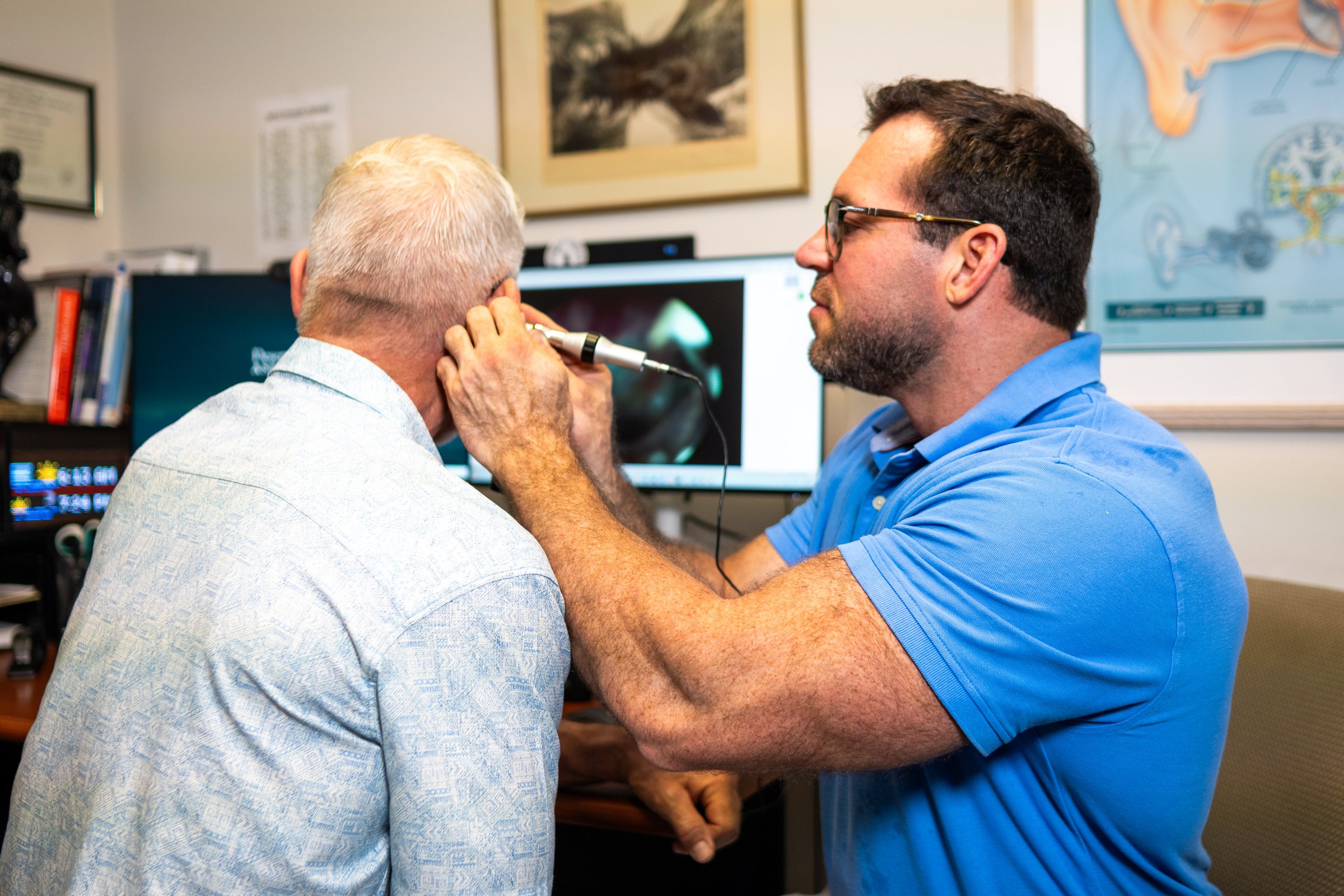
How a fitting actually goes.
- A complete hearing evaluation and video otoscopy
- Live speech mapping with a probe microphone in the canal
- Manual adjustment to prescriptive target, then re-measure
- Test box analysis confirming the device itself performs to spec
- Follow-up whenever you need it, plus automatic deep cleaning every six months
Come see the difference measurement makes.
Call us, or send a request and we will follow up. Please leave medical details out of the form; we will cover those in person.
Request an Appointment